Remembrance Day to Diwali: UK Festivals You Must Know
Nail Remembrance Day and key UK festivals for the Life in the UK Test. Clear dates, meanings, and study tactics with app tips. Learn how today.
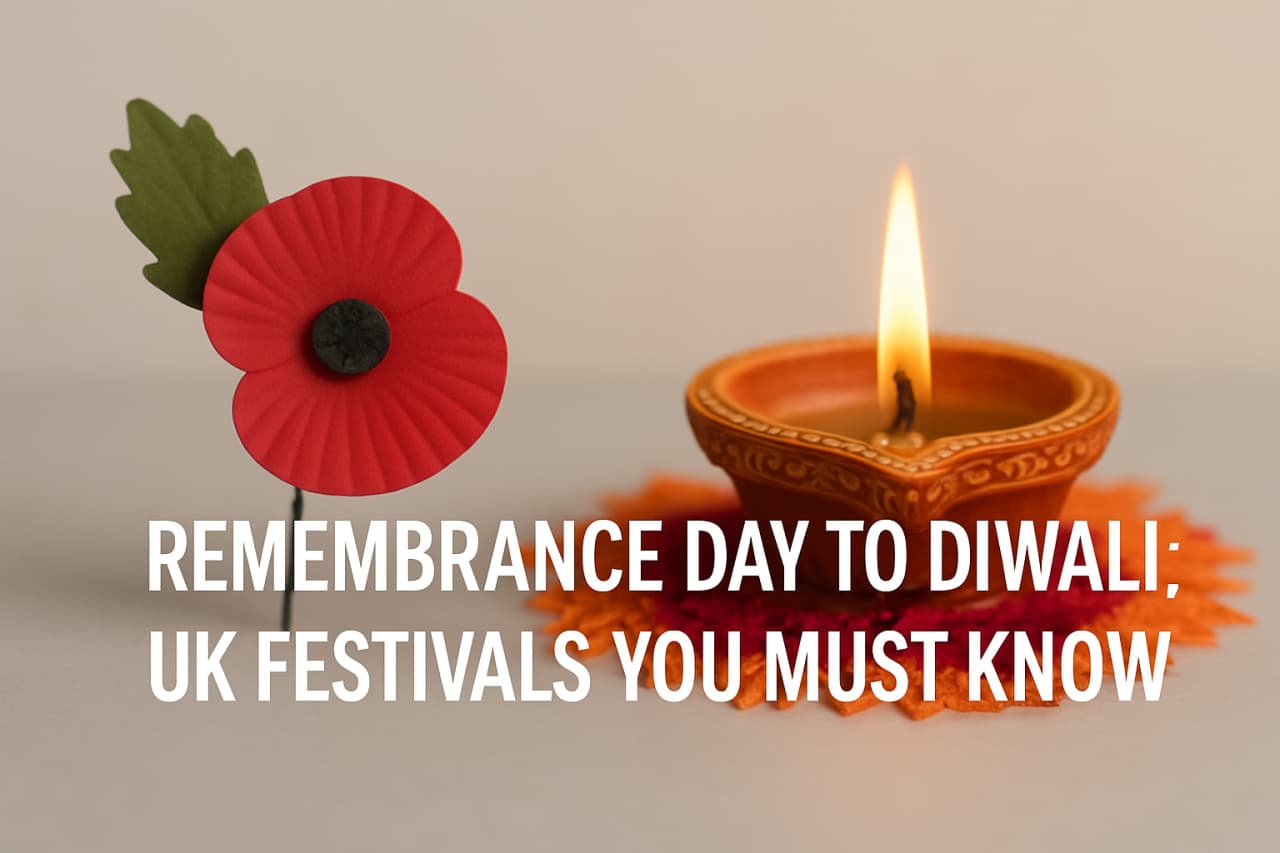
Need quick, reliable marks on the Life in the UK Test? Festival questions are predictable, fact-based, and easy to score—if you know the dates and meanings. This guide gives you a test-ready briefing on Remembrance Day, then a concise UK festivals calendar with high-yield facts, memory tactics, and a mini-quiz. Use it to study fast and avoid costly retests.
Why UK festivals matter for the Life in the UK Test
Festival and tradition questions regularly appear in the test and reward precise recall: dates, symbols, and simple meanings. The exam has 24 questions with a 75% pass mark (18 correct). It was introduced for citizenship in 2005 and for settlement in 2007—designed to assess “sufficient knowledge” of British life. Some items can feel surprisingly specific, which is why a tight, memorisable list helps.
What to memorise: the date (or month/season), the main meaning, and one symbol or custom.
Where people slip: mixing up Remembrance Day vs Remembrance Sunday, and UK Mother’s Day vs the US date.
Value: these are among the fastest facts to learn for easy marks.
Background reading if you are new to the exam: see What is the Life in the UK Test? and our Study Guide: 6 Critical Topics.
Why preparation matters: applicants must pay for each attempt, and one candidate reportedly sat the test 118 times at £50 each—an expensive way to learn. Targeted prep avoids this.
Remembrance Day: meaning, symbols, and test facts
Definition for the test: Remembrance Day (Armistice Day) is marked on 11 November to remember those who died in the First World War and later conflicts. A two-minute silence is held at 11am. The poppy is the symbol of remembrance.
Origins and dates: from Armistice to today
Why 11 November? It marks the armistice signed in 1918, ending First World War hostilities on the Western Front.
Remembrance Day is observed every 11 November. Remembrance Sunday is the nearest Sunday to 11 November, when the national commemorations are held.
The Unknown Warrior in Westminster Abbey symbolises all unidentified fallen servicemen, proposed in 1920.
How it’s observed across the UK
Two-minute silence at 11am on 11 November; also observed during the Remembrance Sunday service.
Poppy Appeal: red poppies are sold each autumn to raise funds for veterans, led by the Royal British Legion since 1921.
National Service at the Cenotaph in Whitehall, London, with wreath-laying by the Royal Family, leaders, and veterans; local memorials hold services nationwide.
Alternative poppies exist: white poppies for peace and purple poppies to remember animals in war (less common than red).
Test-ready facts and common mistakes
Date: 11 November (Remembrance Day) vs the nearest Sunday (Remembrance Sunday).
Symbol: red poppy; inspired by the poem In Flanders Fields and adopted in 1921.
Silence: two minutes at 11am.
Place: Cenotaph in Whitehall hosts the main national service.
Avoid: confusing it with Bonfire Night (5 November) or assuming it always falls on a Sunday.
For exam technique on avoiding slip-ups like these, review 7 Common Life in the UK Test Mistakes.
Your UK festivals calendar: dates and meanings
Memorise the date (or timing), the core meaning, and one custom. Use the notes below and the quick-reference table.
Festival | Date or Timing | Core Meaning | One Key Custom |
|---|---|---|---|
New Year’s Eve / New Year | 31 Dec / 1 Jan | Start of the year | Countdown & fireworks |
Valentine’s Day | 14 Feb | Love & friendship | Cards, flowers, gifts |
April Fool’s Day | 1 Apr (morning) | Light-hearted pranks | Jokes before midday |
Mothering Sunday | 4th Sunday of Lent | Honouring mothers | Cards & family meals |
Father’s Day | 3rd Sunday in June | Honouring fathers | Cards & gifts |
Lent | 40 days before Easter | Reflection & fasting | Shrove Tuesday pancakes |
Easter | Mar/Apr (varies) | Resurrection of Jesus | Church, eggs, hot cross buns |
Vaisakhi | Mid-Apr (varies) | Sikh new year, Khalsa | Nagar Kirtan processions |
Eid al-Fitr | Varies (lunar) | End of Ramadan | Prayers, charity, meals |
Eid ul Adha | Varies (lunar) | Commemoration of Ibrahim | Prayers, sharing food |
Diwali | Oct/Nov (varies) | Festival of lights | Lamps, sweets, family |
Hanukkah | Nov/Dec (varies) | Jewish festival of lights | Lighting the menorah |
Halloween | 31 Oct | Autumn tradition | Costumes, trick-or-treat |
Bonfire Night | 5 Nov | Gunpowder Plot 1605 | Bonfires, fireworks |
Remembrance Day | 11 Nov | War dead remembrance | Two-minute silence, poppy |
Christmas Day | 25 Dec | Birth of Jesus | Gifts, family meal |
Boxing Day | 26 Dec | Charity & leisure | Sport & sales |
New Year and New Year’s Eve
Celebrated on 31 December and 1 January with countdowns, fireworks, and gatherings in town centres and at home. In Scotland (Hogmanay), street parties and singing Auld Lang Syne are well known, but the test typically focuses on the date and fireworks custom.
Valentine’s Day
On 14 February, people exchange cards and small gifts to express affection. Know the date and the card/gift custom.
April Fool’s Day
Light-hearted jokes or pranks on 1 April, traditionally before midday—part of British humour. After noon, pranksters are the “April fool.”
Mothering Sunday (UK Mother’s Day)
Falls on the fourth Sunday of Lent (in March for most years). Distinct from the US Mother’s Day in May. Families give cards, flowers, and share a meal.
Father’s Day
Celebrated on the third Sunday in June with cards and small gifts.
Lent
A Christian period of reflection and fasting in the 40 days leading up to Easter. The day before Lent starts is Shrove Tuesday (Pancake Day), known for making pancakes and using up rich ingredients.
Easter
Commemorates the death and resurrection of Jesus. Good Friday marks the crucifixion; Easter Sunday celebrates the resurrection. Customs include church services, exchanging chocolate eggs, and eating hot cross buns.
Vaisakhi
A major Sikh festival in mid-April, marking the formation of the Khalsa and often considered the Sikh new year. UK Sikh communities hold processions called Nagar Kirtan, with singing of hymns and community service.
Eid al-Fitr
Marks the end of Ramadan. The UK Muslim community gathers for morning prayers, shares festive meals, and gives charity (Zakat al-Fitr). Date varies by the lunar calendar.
Eid ul Adha
Commemorates Prophet Ibrahim’s willingness to sacrifice. Observed with prayers, charity, and sharing food with family and those in need. Date varies by the lunar calendar.
Diwali
The festival of lights, celebrated by Hindus, Sikhs, and Jains in October/November. Homes and temples are lit with lamps; families share sweets and gifts. Major UK cities host Diwali light displays and community events.
Hanukkah
Jewish festival of lights observed for eight nights in November/December. The menorah is lit nightly, adding one candle each day; families may exchange gifts and play dreidel.
Halloween
On 31 October, children wear costumes and go trick-or-treating; neighbourhoods hold themed events and pumpkin displays.
Bonfire Night (Guy Fawkes Night)
On 5 November, people attend bonfires and fireworks, recalling the failed Gunpowder Plot of 1605. Some communities display effigies (guys) on the bonfire.
Christmas Day
25 December: Christian celebration of the birth of Jesus. Widely observed with church services, exchanging gifts, and a family meal (often turkey in the UK).
Boxing Day
26 December: linked to charity and giving boxes to workers in the past. Today it features sport (football, horse racing) and major shopping sales.
Study tactics to remember dates and meanings
If the list looks long, use a system. Below are fast, exam-focused tactics that work.
Anchor dates and seasonal clustering
Build a mental year: place fixed dates first (1 Jan, 14 Feb, 1 Apr, 31 Oct, 5 Nov, 11 Nov, 25–26 Dec).
Cluster by season: Spring (Lent/Easter, Mothering Sunday), Summer (Father’s Day), Autumn (Halloween, Bonfire Night, Diwali), Winter (Hanukkah, Christmas, Boxing Day, New Year).
Attach one cue per festival: poppy for Remembrance, fireworks for Bonfire Night, pancakes for Shrove Tuesday.
Test yourself aloud: say date + meaning quickly (e.g., “5 Nov — Gunpowder Plot — fireworks”).
Use the Life in the UK Test App for spaced practice
If you are overwhelmed or short on time, the Life in the UK Test App helps you master these facts efficiently:
Brit-Bear assistant breaks topics into bite-size cards and nudges revision.
Readiness Score shows if you are exam-ready and highlights gaps (e.g., if you keep missing festival dates).
Hard Mode mocks simulate tricky wording, building confidence under pressure.
Offline access means you can review a few dates anywhere, anytime.
Try the festivals deck first, then a timed mock. For broader strategy, see Ace the Life in the UK Test.
Mini-quiz: check your knowledge
When is Remembrance Day?
11 November. Two-minute silence at 11am. Symbol: red poppy.What is commemorated on Bonfire Night?
The failed Gunpowder Plot of 1605; observed on 5 November with bonfires and fireworks.What happens on New Year’s Eve?
Countdown to midnight on 31 December, with fireworks and celebrations.When is Valentine’s Day and what is a common custom?
14 February; sending cards and gifts.What is Mothering Sunday’s timing in the UK?
Fourth Sunday of Lent (March in most years), different from the US date.What does Lent lead up to and what happens on Shrove Tuesday?
Lent leads up to Easter; pancakes are made on Shrove Tuesday.What are Good Friday and Easter Sunday about?
Good Friday: crucifixion; Easter Sunday: resurrection.Which communities celebrate Diwali and how?
Hindus, Sikhs, and Jains; lights, sweets, and family gatherings.What is the key Hanukkah practice?
Lighting the menorah over eight nights.What do Eid al-Fitr and Eid ul Adha mark?
End of Ramadan (al-Fitr) and Ibrahim’s willingness to sacrifice (ul Adha); prayers, charity, sharing food.
Ready for more? Try our mixed-topic drills here: Life in the UK Test Practice.
Next step: master UK festivals and pass first time
Here is a quick 20-minute plan to finish festivals:
Skim the table above once.
Memorise fixed dates first (1 Jan, 14 Feb, 1 Apr, 31 Oct, 5 Nov, 11 Nov, 25–26 Dec).
Open the Life in the UK Test App and study the festivals deck (10 minutes).
Run one Hard Mode mock and review explanations (8–10 minutes).
Download the Life in the UK Test App now to get the full official content, Brit-Bear, Readiness Score, Hard Mode mocks, and offline access.
Download on App Store | Get it on Google Play
Sources and context
Armistice Day is observed on 11 November; history and UK observance details.
Royal British Legion has sold red poppies since 1921; the Poppy Appeal supports veterans.
The poppy’s symbolism traces to “In Flanders Fields.”
White poppies date to 1933 (Co-operative Women’s Guild) and are far less common than red.
Life in the UK Test overview, pass rate of 75%, and introduction dates.
FAQ
Is Remembrance Day always on a Sunday?
No. Remembrance Day is 11 November. Remembrance Sunday is the nearest Sunday to that date.
What is the symbol of Remembrance Day?
The red poppy, linked to First World War battlefields and used in the Royal British Legion’s Poppy Appeal.
What is the difference between Bonfire Night and Remembrance Day?
Bonfire Night is 5 November (Gunpowder Plot, fireworks). Remembrance Day is 11 November (war remembrance, silence and poppies).
When is UK Mother’s Day?
On the fourth Sunday of Lent (March in most years), not in May like in the US.
How many questions are on the Life in the UK Test?
24 questions, with a 75% pass mark. Target quick-win topics like festivals to secure marks.
How can I avoid retaking the test?
Use spaced practice and realistic mocks. The Life in the UK Test App’s Readiness Score shows when you are prepared to pass.
Published
August 23, 2025

