Stressed about the Life in the UK Test? You are not alone. This friendly, complete 2026 guide explains the test, what has changed, how to book, what to study, and a smart 14‑day plan to pass on your first attempt.
We keep language simple for non‑native speakers and include trusted links, checklists, and an app‑based study plan to save time and money.
Table of Contents
- Introduction: Your 2026 Life in the UK Test Roadmap
- What is the Life in the UK Test?
- Who must take it and when?
- What topics does it cover?
- Key Changes and Updates for 2026
- Life in the UK Test Requirements 2026: Are You Eligible?
- Life in the UK Test Format: A 2026 Step-by-Step Tour
- How to Book the Life in the UK Test: Step-by-Step
- Life in the UK Test Cost in 2026: Fees, Retakes, Savings
- Life in the UK Test Pass Mark and Results Explained
- What to Expect on Your Life in the UK Test Day
- Official vs Unofficial Life in the UK Test Resources
- Smarter Prep with the Life in the UK Test App
- Topic Coverage and Sample Question Styles
- Common Mistakes and Myths to Avoid
- The Test and the Broader Immigration Process
- Accessibility, Special Cases, and Support
- 30‑Day Countdown: Timeline and Printable Checklist
- FAQs: Quick Answers
- Glossary
- Trusted Links and How to Stay Up to Date
Introduction: Your 2026 Life in the UK Test Roadmap
The Life in the UK Test is a key step towards settlement (ILR) or British citizenship. In 2026, the rules, format, and costs remain straightforward if you have the right plan. This guide shows you exactly what to study, how to book, how scoring works, and how to avoid the most common mistakes.
What you will get here:
- Plain‑English definitions and checklists
- Step‑by‑step booking instructions and fees
- A realistic 14‑day study plan with mock tests
- Trusted links to GOV.UK so you can verify every detail
What is the Life in the UK Test?
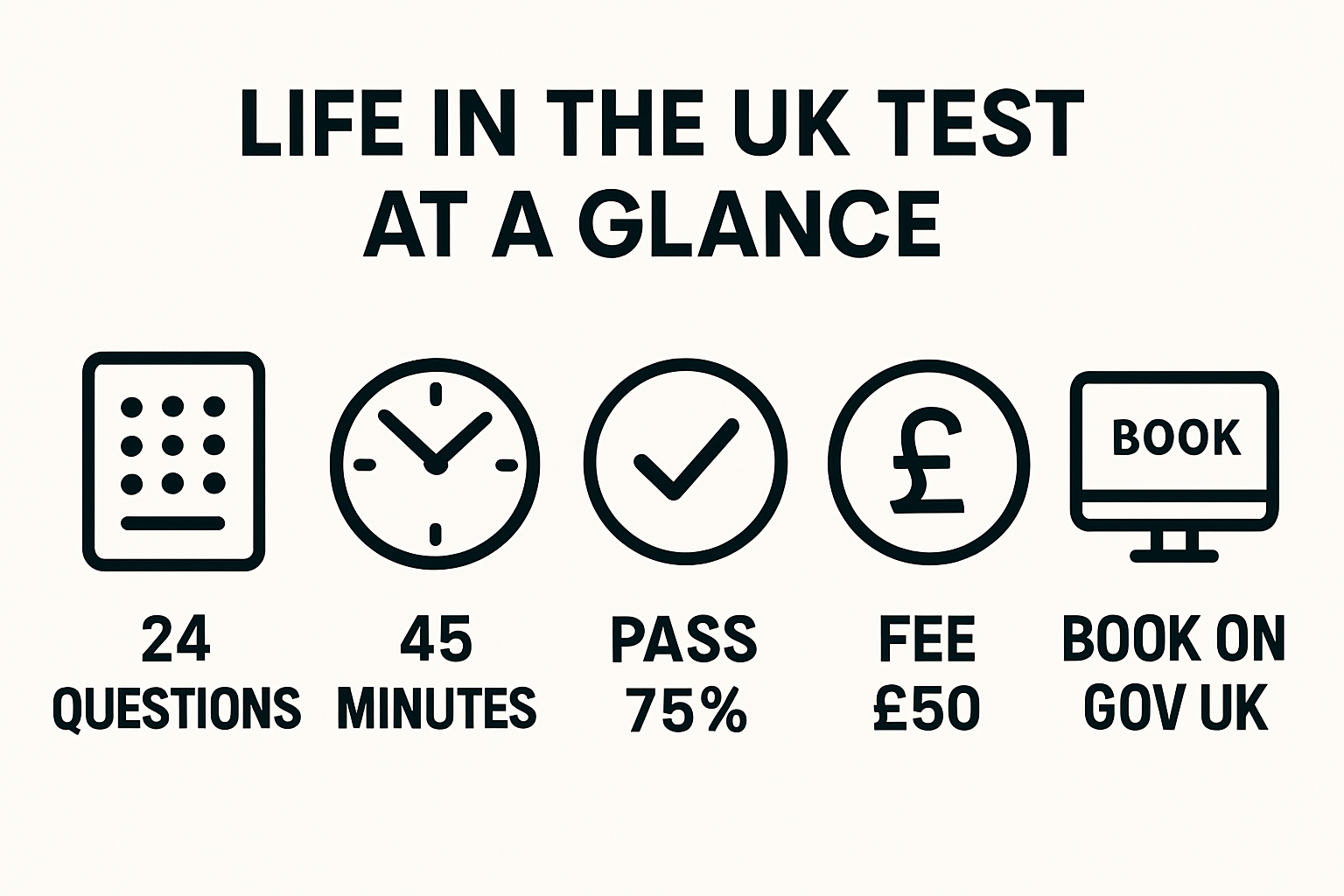
Definition: The Life in the UK Test is a 24‑question multiple‑choice exam (45 minutes) that checks your knowledge of the UK's values, history, laws, and everyday life. You usually need it to apply for indefinite leave to remain (ILR) or British citizenship.
The test is based on the official handbook, Life in the UK: A Guide for New Residents. You book the test on the GOV.UK Life in the UK Test page.
Who must take it and when?
You generally must pass the test if you are:
- Applying for ILR (settlement)
- Applying for British citizenship (naturalisation)
Most people take the test before submitting their ILR or citizenship application, so they can include the pass details. Some applicants are exempt (see the next section).
What topics does it cover?
The official syllabus includes:
- Values and principles of the UK (rights, responsibilities)
- UK history (from early Britain to the present)
- Government, the law, and the political system
- Everyday life and culture (institutions, traditions, practical knowledge)
Everything is drawn from the official handbook. Focus on understanding, not only memorising dates.
Key Changes and Updates to the Life in the UK Test for 2026
As of the latest official guidance, the core format remains: 24 questions, 45 minutes, and a 75% pass mark. Always verify current rules on GOV.UK before booking.
What is officially announced vs. what to watch
- Confirmed: Booking via GOV.UK, £50 fee, bring approved ID and proof of address, 7‑day minimum wait to retake.
- Watch for: Occasional updates to the handbook wording or administrative processes. Check GOV.UK and your confirmation email.
Syllabus and handbook: what may change and how to prepare
If the handbook updates, do not panic. The core, timeless topics (values, institutions, major historical periods) change slowly. Prioritise:
- Constitutional basics (Parliament, Prime Minister, devolved governments)
- Key rights and responsibilities
- High‑level historical timelines and what changed era to era
Booking and security procedures
Expect identity checks, a photo at the test centre, secure lockers, and strict no‑phone rules. Arrive early with your exact ID and address proof used at booking.
Life in the UK Test Requirements 2026: Are You Eligible?
Use this quick checklist to confirm your situation before you book.
Eligibility, age limits, and exemptions
- Age: Generally required between ages 18 and 65.
- Exemptions: Under 18, over 65, or those with long‑term physical/mental conditions (with evidence) may be exempt. See GOV.UK KOLL guidance.
- Some visa categories have specific rules; verify on ILR guidance or citizenship guidance.
For a readable summary of who is exempt, see our guide: Life in the UK Test Exemptions.
Acceptable ID and proof of address
Bring the same ID you used to book, plus address proof with your name and postcode. Typical documents (check your confirmation for exact requirements):
- Valid passport, biometric residence permit (BRP), or EU national ID card
- Proof of address: bank statement, utility bill, or council tax bill (recent; council tax can be for the current year). See details on GOV.UK.
Name mismatches and document issues
Names must match exactly across your booking and ID. If they do not:
- Update your booking details to match your ID.
- If your name changed, bring supporting evidence (e.g., deed poll, marriage certificate).
- Ensure accent marks, hyphens, and order of names are consistent.
If unsure, contact the test provider via the link in your booking confirmation well before your test.
Life in the UK Test Format: A 2026 Step-by-Step Tour
Question types, timing, and navigation
- Format: computer‑based multiple choice
- Questions: 24
- Time limit: 45 minutes
- Navigation: Flag a question to return later; review all before submitting
Subject coverage and weighting
The questions draw from all handbook areas. Exact weightings are not published, but most tests include a balance of values, history, government/law, and everyday life. Prepare broadly, with slightly more time on UK history and civic structures.
Exam rules and test‑centre policies
- Arrive early; late arrivals may be refused
- Photo and ID checks required
- No phones, smartwatches, notes, or bags in the exam room
- Follow staff instructions; misconduct can void your result
How to Book the Life in the UK Test: Step-by-Step
Book only via the official website: GOV.UK Life in the UK Test. Avoid third‑party resellers.
Create your account and prepare documents
- Create an account with your full legal name.
- Have your ID ready (passport/BRP) and address proof details.
- Double‑check spellings and date formats.
Choose a test centre, date, and time
- Enter your postcode to see nearby centres.
- Pick a date at least a few days ahead for calm preparation.
- Plan travel and arrive 30 minutes early.
Pay the fee and confirm your booking
- Pay the £50 fee by card on GOV.UK.
- Check your confirmation email for test centre address, what to bring, and any special instructions.
- Add the appointment to your calendar.
Reschedule, cancellations, and retakes
- You can move or cancel your booking via your GOV.UK account (check deadlines in your confirmation).
- If you fail, you can rebook after 7 days. Use the time to review errors and take full mock tests.
Want screenshots and pitfalls? Read our step‑by‑step booking guide.
Life in the UK Test Cost in 2026: Fees, Retakes, Savings
Official test fee and extra expenses
- Official fee: £50 (set on GOV.UK)
- Extras to budget: travel, practice materials, and potential retake fees
Retake policy, waiting periods, and budgeting
- Minimum wait to rebook after a fail: 7 days
- Each retake costs another £50
- Reduce risk by doing at least 3 realistic full mock exams before test day
Ways to reduce costs without risking your result
- Use a structured plan (see the 14‑day plan below)
- Choose resources with explanations so mistakes turn into learning
- Practise under timed conditions to build pacing confidence
More cost tips: Life in the UK Test Cost guide.
Life in the UK Test Pass Mark and Results Explained
What score do you need to pass?
You need at least 18 correct answers out of 24 (75%). Aim for 20+ in practice to stay safe on test day.
Receiving and using your result
- You will receive a pass notification with a unique reference number.
- Keep the details safe; you will need them for ILR or citizenship applications.
- The pass does not expire. Store a photo/scan as backup.
If you fail: next steps
- Review which topics you struggled with.
- Study the relevant handbook sections.
- Take timed mocks and rebook after 7 days when your scores stabilise above 80%.
What to Expect on Your Life in the UK Test Day
Arrival, check‑in, and security
- Arrive 30 minutes early
- Bring the same ID and proof of address you used to book
- Photo taken at the centre; belongings stored in lockers
- Listen carefully to instructions; ask questions if unsure
During the exam: focus and time management
- Skim all questions first; flag long ones
- Eliminate obviously wrong options
- Use the final 5 minutes to review flagged questions
After the exam: results and next steps
- Follow staff guidance to receive your outcome
- If you passed, save your pass details immediately
- If not, schedule a focused week of review and rebook after day 7
Official vs Unofficial Life in the UK Test Resources
Build a toolkit that balances official accuracy with efficient practice.
Official handbook and where to get it
The Life in the UK: A Guide for New Residents handbook is the only official study source. Start here to master the facts. For booking and official links to study materials, see GOV.UK.
How to evaluate practice apps and online resources
- Aligned to the latest handbook edition
- Clear explanations, not just answers
- Mock tests that feel like the real exam
- Progress tracking and weak‑topic drills
- Offline access for commuting and travel
Spotting scams and outdated content
- Avoid "real questions" claims or illegal question dumps
- Check publish/update dates and recent reviews
- Confirm the app/site references the current handbook
Quick comparison
| Resource | Strength | Watch‑outs |
|---|---|---|
| Official handbook | Accurate, complete | Text‑heavy; slower to revise |
| Quality practice app | Explanations, mocks, tracking | Must match latest edition |
| Free websites | Quick quizzes | Often outdated or incomplete |
Smarter Prep with the Life in the UK Test App
Many candidates feel overwhelmed by the amount of content, limited study time, and fear of retakes. The Life in the UK Test App is designed to solve these problems with:
- Optimised official study materials so you learn what the exam actually tests
- Brit‑Bear smart assistant to explain confusing topics in plain English
- Readiness score tracker so you know when you're truly exam‑ready
- 650+ question bank with explanations to turn mistakes into learning
- Realistic mock tests (including Hard Mode) that mirror exam timing and pressure
- Offline access for study on the go
Features that speed up your progress
- Topic‑by‑topic quizzes to close knowledge gaps quickly
- Personalised review sessions generated from your weak areas
- Hard Mode mocks to build confidence above the 75% pass line
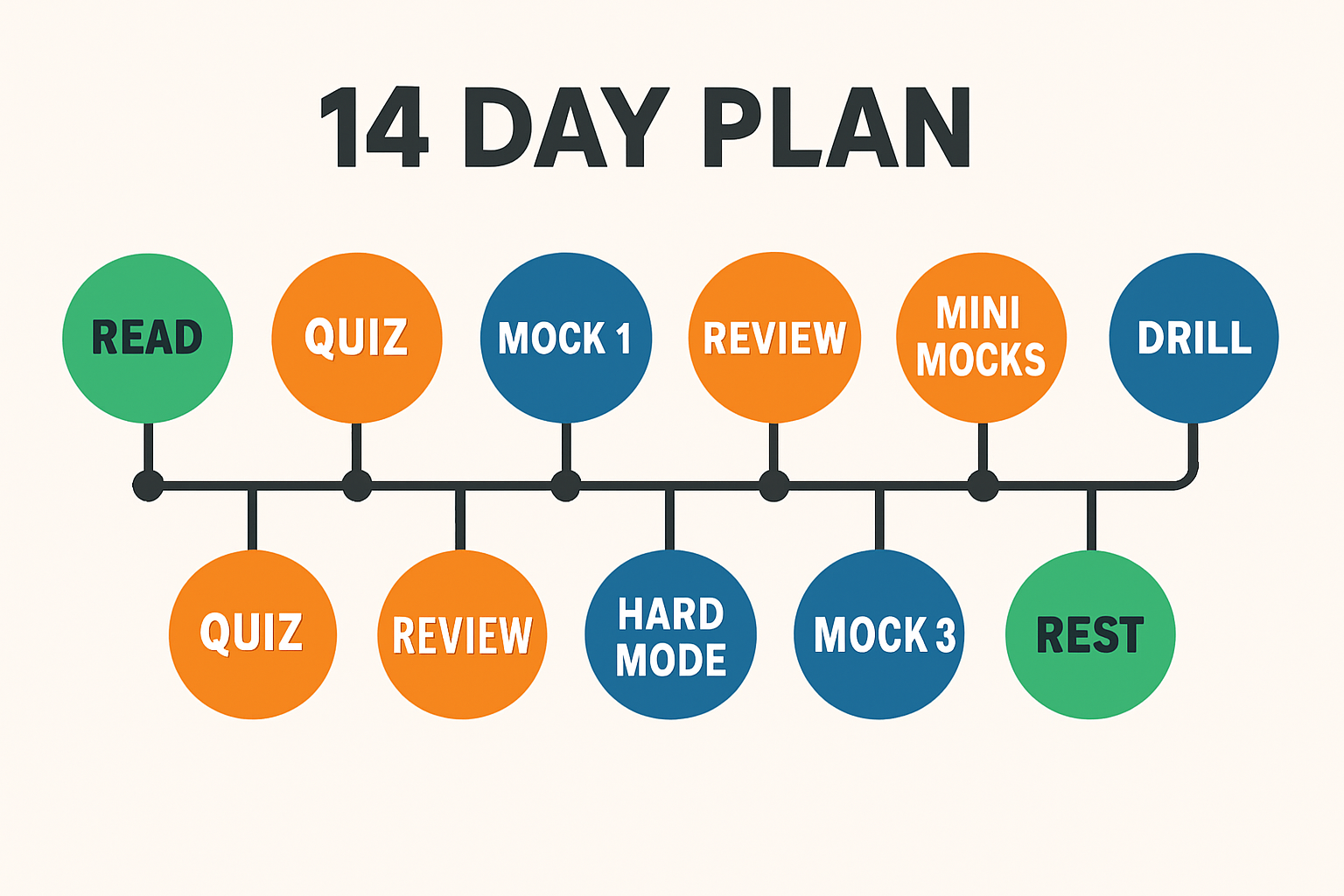
A 14‑day study plan using the app
Follow this structure for a first‑time pass:
- Days 1–3: Read core chapters (values, institutions) + short quizzes
- Days 4–6: UK history timeline + topic drills with explanations
- Day 7: First full mock (diagnostic) + review errors
- Days 8–10: Weak areas + 2 short timed mini‑mocks
- Day 11: Full mock in Hard Mode + deep review
- Day 12: Everyday life and culture + flashcards
- Day 13: Final full mock (aim 80%+) + light revision
- Day 14: Rest, logistics check, early night
Download and start today
Install now and follow the built‑in plan:
Topic Coverage and Sample Question Styles
Values and principles of the UK
Know the rule of law, democracy, individual liberty, mutual respect, and tolerance.
Example question style: Which of the following is a fundamental principle of life in the UK? (Select one)
UK history essentials
Understand the sequence: early Britain → Romans → Anglo‑Saxons and Vikings → Normans → Tudors and Stuarts → Georgians and Victorians → 20th century → modern UK.
Example question style: Place these events in chronological order.
Government, law, and political system
Know Parliament (Commons, Lords), Prime Minister and Cabinet, devolved governments, and how elections work.
Example question style: Which role is responsible for forming the government after a general election?
Everyday life, culture, and traditions
Recognise national days, famous cultural institutions, and practical knowledge about life in the UK.
Example question style: Which UK public institution is associated with …?
Common Mistakes and Myths to Avoid
Reading too fast and missing keywords
- Underline or note key terms in your head: dates, names, "not", "except"
- Re‑read any question you answered in under 5 seconds
Memorising dates without context
- Connect dates to stories: cause → event → consequence
- Create a simple timeline so you remember the "big picture"
Skipping full‑length mock tests
- Do at least three full mocks to build timing and confidence
- Analyse every mistake with explanations the same day
Life in the UK Test and Its Role in the Broader Immigration Process
ILR vs. British citizenship: where the test fits
The test is usually required for ILR and again recognised for citizenship. Many people take it once, then use the same pass details later for naturalisation (the pass does not expire).
Life in the UK Test vs. English language proof (B1)
These are separate requirements. In most cases you need both: the Life in the UK Test and an approved B1 English test (or exemption). See the list of approved English tests. For help choosing, read our B1 English Test guide.
Documents you submit with your application
- Life in the UK Test pass details (unique reference number)
- English language certificate or exemption evidence
- Identity and residency documentation
See the broader process in our guide: How to Get British Citizenship.
Accessibility, Special Cases, and Support
Requesting reasonable adjustments
If you have a disability or health condition, you can request reasonable adjustments. You will usually need medical evidence and must apply in advance through the booking system. See instructions in your confirmation and the guidance on GOV.UK.
Refunds, cancellations, and complaints
Policies are outlined in your booking confirmation and on GOV.UK. Keep records of all communications. If you need to complain, use the official contact details provided in your confirmation email.
If your test‑centre experience was problematic
- Write down what happened (times, names, details).
- Keep any evidence (emails, photos of notices).
- Contact the test provider promptly using the link in your booking confirmation.
30‑Day Countdown: Timeline and Printable Checklist
30–14 days: build knowledge and vocabulary
- Read the official handbook chapters steadily (30–45 minutes per day)
- Create flashcards for new words and key facts
- Do short daily quizzes; note weak topics
14–7 days: consolidate and take mocks
- Take two full mock tests under timed conditions
- Review all mistakes the same day
- Re‑read tricky sections (e.g., timelines, institutions)
Final 7 days to test day
- Do one more full mock (target 80%+)
- Prepare documents and route to the test centre
- Light revision the day before; sleep early
FAQs: Quick Answers to Common Questions
How many questions and what is the pass mark?
24 questions, 45 minutes. You must score at least 18/24 (75%).
How soon can I retake if I fail?
You can rebook after 7 days. Use that time for focused review and one or two full mock tests.
How long is the pass valid?
It does not expire. Keep your pass details and unique reference number safe for future applications.
Where do I book the official test?
Only on GOV.UK: search "Life in the UK Test" or go to the booking page directly.
What ID and documents do I need on the day?
The same ID used to book and acceptable proof of address with your name and postcode (see GOV.UK for details).
Glossary: Simple Definitions of Key Terms
- ILR (Indefinite Leave to Remain): Permission to settle in the UK without time limit.
- Naturalisation: The legal process of becoming a British citizen.
- KOLL: Knowledge of English and Life in the UK requirements.
- Devolved government: Decision‑making powers given to Scotland, Wales, and Northern Ireland.
- Mock test: A practice exam that simulates the real test conditions.
Trusted Links and How to Stay Up to Date
- Book and prepare: Life in the UK Test (GOV.UK)
- Knowledge of English and Life in the UK (KOLL)
- Indefinite Leave to Remain
- Becoming a British citizen
- Approved English language tests (B1)
Tip: Re‑check GOV.UK the week you book and the day before your test for any updates.
Ready to start? Prepare with structure and confidence using the Life in the UK Test App: